
Described by The Times as “the impressive De Eça” and by OperaWire as “a tenor for the future,” Portuguese tenor José de Eça is rapidly establishing himself as one of the most exciting voices of his generation on the international opera stage.
He began his musical training under his father, the distinguished baritone and lieder specialist José de Oliveira Lopes, before continuing at the Conservatório Superior de Música de Gaia. He made his professional debut in productions including Amahl and the Night Visitors, The Sound of Music, Eloise, Brundibár, Die Zauberflöte, and Le Nozze di Figaro. His repertoire now includes leading tenor roles such as the Duke (Rigoletto), Tamino (Die Zauberflöte), Don José (Carmen), Rodolfo (La Bohème), Cavaradossi (Tosca), Dick Johnson (La Fanciulla del West), and Edgardo (Lucia di Lammermoor).
In the 2022/23 season, de Eça performed Pinkerton (Madama Butterfly) at Dublin’s National Concert Hall, as well as Don José and Tamino, and appeared as the Duke in a semi-staged Rigoletto. In 2024, he made a critically acclaimed debut as Cavaradossi with Opera Holland Park in London, later reprising the role in Portugal.
In 2025, he made his London debut as Edgardo (Lucia di Lammermoor) with Opera Holland Park to widespread praise.
Looking ahead, de Eça will debut as Macduff (Macbeth) for Chelsea Opera’s 75th anniversary, appear in Germany at Alte Oper Frankfurt, and perform as tenor soloist in Ponchielli’s Messa at Teatro São Carlos, Lisbon. In 2026, he will open the year with the New Year’s Concert in Serbia and return to London as Dick Johnson (La Fanciulla del West) and Calaf (Turandot), followed by his Austrian debut in 2027 as Alfred (Die Fledermaus).
Alongside opera, he has appeared in oratorio, including Haydn’s Missa in Angustiis and Rossini’s Petite Messe Solennelle with the Círculo Portuense de Ópera, and Puccini’s Messa di Gloria in Gran Canaria.
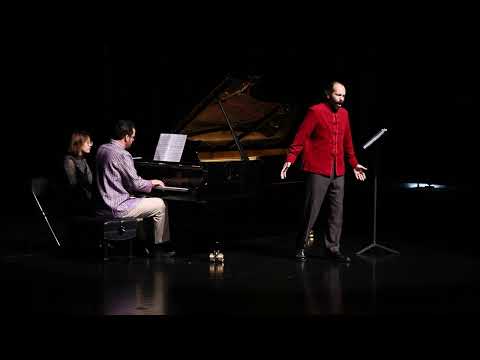
An accomplished recitalist, he has performed across Portugal, Brazil, Chile, France, Italy, Spain, Ethiopia, Zimbabwe, South Africa, China, Egypt, Mozambique, and Ireland. In September 2025, he completed a successful recital tour of China, performing at Chengdu City Concert Hall, Chanba Poly Theatre (Xi’an), and Mianyang Concert Hall.
His debut recording, Dichterliebe (KNS Classical, 2021), features Schumann’s Dichterliebe and Liszt’s Tre Sonetti di Petrarca.
He has collaborated with leading artists and conductors including Elena Mosuc, Markus Huber, Paule Grimaldi, Álvaro Teixeira Lopes, Luís Costa, Ángel González, Armando Vidal, Jonathan Brandani, Anne Sophie Duprels, Matthew Kofi Waldren, Stephen Barlow, Renaud Doucet, Paul Edelmann, and Amanda Echalaz.

Turandot, Opera Holland Park (London), 2026
Casting nodded both back and forward, with long-time company regular Anne Sophie Duprels an imperious Turandot, and rising-star tenor José de Eça (fresh from an impressive turn as Dick Johnson in OP's Fanciulla) as Calaf. The brutal physicality of their interaction - she rigid and convulsed with trauma, he grabbing and pulling her, forcing himself into her space - was at odds with Duprels' softer-edged tone and the rounded beauty of de Eça's middle register, catching the contradictions of this relationship where outer barbs conceal inner wounds.
- Opera Now
But there are no question marks over José de Eça's firm, bronze-toned singing as Calaf.
- The Stage
José de Eça leads a strong cast as Calaf, his phrasing supple and his tone ideally Italianate. Nessun dorma was both elegant and thrilling, while an optional top C in the riddle scene found the Portuguese tenor barely breaking a sweat.
- The guardian
The positioning of characters in front of and behind the orchestra, so that they sometimes sang across the pit to each other, was not always successful. José de Eça, who played Calàf, probably had the most powerful voice of all, so it did not help with balance when he was often the one singing from the front of the stage. His performance, however, was something special as he revealed the most striking, expansive and aesthetically pleasing tenor. His performance of 'Nessun dorma' was sensational, and he even banged the gong himself when he accepted the riddle challenge.
- MusicOhm
Fanciulla del West, Opera Holland Park (London), 2026
As Dick Johnson, de Eça gave a very powerful performance as his expansive, impassioned and all embracing tenor conveyed the character’s stated aim to renounce his criminal ways, and be loved by Minnie. The fact that the audience was moved to believe him so readily, revealed how convincing he was, and the pair’s love duet was an undoubted highlight of the evening.
- Sam Smith, Musicomh
But then she is overtaken by the arrival of the enigmatic Dick Johnson (José de Eça), who matches her in vocal virtuosity with stratospheric top notes; they fall in love even though he turns out to be the wanted Mexican bandit Ramerrez.
- Nicolas Kenyon, The Telegraph
She’s complemented by José de Eça as a refreshingly down-to-earth Dick Johnson. His Italianate tenor possesses all the requisite fire power, and his performance culminates in a deeply felt Ch’ella mi creda.
- Clive Paget, The Guardian
A bandit redeemed by the love of a good woman, Dick Johnson is stirringly sung by José de Eça, who perfectly captures his character’s inner conflicts.
- The Stage
It helped that in José de Eça you had a leading man who had the right combination of swagger and charm. De Eça made a youthful Dick Johnson, still believably passionate. Yet there was a thrilling edge to his voice, so that he captured the sound quality of this character. Neither Minnie nor Dick Johnson have excerptable arias as such, instead they need to be able to soar over Puccini's richly inventive, busy and often loud score. De Eça did this magnificently and captured our attention without ever seeming to scream 'famous tenor'. Dick Johnson is the least active of heroes, we see him charming Minnie at the end of Act One and in Act Two, but all his heroics take place off-stage. Here de Eça and Echalaz created a believable intimacy on the Opera Holland Park stage so that the swift progress of their relationship was believable and captivating.
- Planethugill
Silvano (Mascagni), Chelsea Opera Group at Cadogan Hall, 2026
The opera’s barcarola is often performed on its own, and is preceded by Silvano’s ‘S’è spento il sol’, which José de Eça conquered with his extremely smooth, expansive and all embracing tenor. In fact, the strength of the soloists made the evening feel special
- MusicOMH
There were different tenors for each work. Although Silvano is the villain of his drama, José de Eça imparted a tragic, urgent lyricism to the role, like a Cavaradossi in the ardour and focus of this interpretation. As the philandering Turiddu in the other opera, Andrés Presno offered a swaggering alacrity, his ringing high notes conveying his character’s wilfulness with extrovert musical charisma. One might say that the two singers’ contrasting styles were like those of Domingo and Pavarotti respectively, each alluring in their alternate ways.
- Opera today
Lucia di Lammermoor, Opera Holland Park, 2025
It is the tenor José de Eça as her beloved Edgardo who best catches the mood.
- The Telegraph
The Portuguese tenor José de Eça sings Edgardo with a warm vibrato (reminiscent of a young Joseph Calleja) and ringing top notes.
- The Times
José de Eça’s luscious, Latinate tenor… a role he sings with a fine sense of style.
- The Stage
His is a thoroughly Italianate sound, rich and ringing.
- The Guardian
José de Eça is cast perfectly for Lucia’s lover Edgardo. His tenor voice is richly expressive, effortless in the higher registers, a joy for the ears.
- Plays to See
José de Eça may be Portuguese, but his voice has a genuine Italianate sheen and he's the only one of the male principals who communicates a sense of dangerous emotions in play.
- Standard
The two main roles are little short of sublime.
José de Eça is Portuguese but his singing absolutely nails the Italianate bel canto of
Donizetti's most luscious melodies.
- Arbuturian
The Edgardo was José de Eça, strong and a perfect foil for France's Lucia, their duet at the close of the first act effective and given extra momentum via Papadopoulos's conducting. Morgan Pearce kept up the good work he had set out early on as Enrico, but it is to Edgardo the final scenes fall. The grave at the front of the stage houses both Lucia and Edgardo; a moment that is both narrowing and exquisitely touching.
- Seen and Heard international
Tenor José de Eça was a strong Edgardo, with a smooth lyric tone that rang excitingly when necessary. There is an attractive dark, almost veiled quality to the voice, intrinsic to the tone, not a fault. He is a sincere actor and certainly spat his more emotional lines out with venom.
- Concertonet
Tosca, Opera Holland Park, 2024
Her Mario Cavaradossi was the Portuguese-born José de Eça, making his Opera Holland Park debut. In this 1960s setting, he wasn’t the church painter we’re familiar with but a street artist, this time painting the blueeyed Madonna on the pavement as pedestrians walked by. An impressive addition to the cast, Eça’s warm and bright timbre shone through, and he sang beautifully throughout. His robust and heartfelt rendering of “E lucevan le stelle” was truly moving and, with a voice of significant stature, he was also very well cast for an open-air setting. This is definitely a tenor with a future.
- Operawire
José de Eça in contrast, as Cavaradossi, was quite a picture in his worn suede jacket and orange shirt and casual jeans, and dismissive of her haughty demeanour. Her fiery outburst as she noticed that the Madonna had blue eyes, not brown (like her own), displayed not only the vanity of the diva but the distress of the older woman spurned. Portuguese tenor, de Eça, made a fine young Cavaradossi. His tenor voice swelled in confidence, like his character as he matures, so that when he sang E lucevan le stelle in Act 3, I was left thinking that this was a tenor to watch out for in the future.
- ArtmuseLondon
On his OHP debut, José de Eça reveals a brilliantly expansive and ringing tenor that shines in Cavaradossi’s Recondita armonia and E lucevan le stelle. It is not unusual for productions to suggest that the artist realises as soon as he is informed of Scarpia’s death and the ‘mock’ execution that neither he nor Tosca will be escaping alive. However, de Eça makes this particularly clear as the contrast between his internal despair and his outward attempt to ensure Tosca’s final moments are happy ones, by encouraging her to picture the perfect life they will have, is very stark.
- Music OMH
Amanda Echalaz sang the title role when this production was new. She's in fearsomely good voice playing a Callas-like diva who knows her worth and is understandably outraged when she thinks her hippyish boyfriend Cavaradossi (José de Eça) is two-timingher. The impressive de Eça displays free, ringing high notes - this is not an OHP night where anyone is drowned out by peacocks.
- The Times
She was well matched by the young Portuguese tenor José de Eça. He captured an ardent naivety in his performance as Cavaradossi and displayed an attractive and well-focused sound.
- Opera Magazine
José de Eça’s Cavaradossi shone at the outset when he sang Recondita armonia, accompanied by the sacristan’s grumbling countermelody. De Eça is a Portuguese tenor of promise. His love for the diva Tosca was caressing, yet there was little evidence of chemistry between his Cavaradossi and Amanda Echalaz’s Tosca. The first sensuous love duet Qual’occhio was engaging.
- Plays to see
Portuguese tenor José de Eça is an admirable find, making a slow-burn Cavaradossi with an element of seriousness to the character rather than the usual hothead, and looking remarkably different without beard and with a full wig. A former baritone, de Eça has a firm, dark voice that becomes critical as it rises, giving his upper range strength and excitement. But this was a singer who successfully gave us all the thrilling moments, in just the right way, and managed to join them all up into a coherent dramatic performance, rather than a sequence of juicy plums.
- Planet Hugill
Portuguese-born tenor José de Eça makes a stunning OHP debut as Cavaradossi, with a rich, Italianate timbre.
- Culture whisper
José de Eça, making his Holland Park debut, is in lustrous voice as the painter, with an intense, wiry sound and dark Italianate hues, like some great Caravaggio altarpiece.
- The Tablet
Her Cavaradossi was OHP debutant José de Eça, a Portugese tenor of promise – and achievement. There is a fine low and middle register (he began as a baritone), and a top which is reliable if not always ringing.
- Bachtrack
Singing the role of radical painter Cavaradossi, tenor José de Eça possesses a distinctive and attractive voice that has yet to reach full maturity - but he's already a stylist in this music. The Stage There are arias, though not the popular classics one finds in Turandot and Butterfly, and they are given full value, particularly by José de Eça (Cavaradossi) and Echalaz (Tosca), the diva playing a diva.
- Broadway world
La faniculla del West, Wexford International Festival, 2018
The rest of the cast did an excellent job with their respective roles, and I was particularly impressed with José de Eça.
- Seen and Heard International
The tenor José de Eça put on a notable performance.
- Opera Wire
José de Eça punktet mit strahlendem Tenor.
- Online Musik Magazine
Note: This is an external Dropbox download link. If you see a sign-in window, scroll down and click “Download only”.



You are currently viewing a placeholder content from Vimeo. To access the actual content, click the button below. Please note that doing so will share data with third-party providers.
More InformationYou are currently viewing a placeholder content from YouTube. To access the actual content, click the button below. Please note that doing so will share data with third-party providers.
More InformationYou need to load content from reCAPTCHA to submit the form. Please note that doing so will share data with third-party providers.
More InformationYou are currently viewing a placeholder content from Google Maps. To access the actual content, click the button below. Please note that doing so will share data with third-party providers.
More InformationYou are currently viewing a placeholder content from Google Maps. To access the actual content, click the button below. Please note that doing so will share data with third-party providers.
More InformationYou are currently viewing a placeholder content from Mapbox. To access the actual content, click the button below. Please note that doing so will share data with third-party providers.
More InformationYou are currently viewing a placeholder content from OpenStreetMap. To access the actual content, click the button below. Please note that doing so will share data with third-party providers.
More Information


